How to Select the Best Turning Insert & Grade for Your Job
Selecting the right turning insert and grade for your machining application is crucial to achieving optimal performance and extending the lifespan of your cutting tools. With a variety of materials, coatings, and geometries available, it can be challenging to determine the best combination for your specific needs. In this blog, we’ll walk you through the key factors to consider when choosing the best turning insert and grade for your job.
1. Understand the Material Being Machined
The material you're machining plays a significant role in determining the insert and grade. Different materials—such as steel, cast iron, stainless steel, or exotic alloys—require inserts with specific characteristics. Here’s how to approach it:
- Steel: For carbon steel and alloy steels, carbide inserts with medium to high hardness are often used. Choose inserts with a tough and durable grade.
- Cast Iron: Cast iron tends to wear inserts quickly due to its abrasive nature. You may need a harder insert with a wear-resistant coating.
- Stainless Steel: Stainless steels can be more difficult to machine. Inserts with a tougher substrate and a coating to improve heat resistance are essential.
- Exotic Alloys: Materials like titanium and nickel-based alloys require inserts with specific geometries and coatings to prevent high-temperature wear.
2. Choose the Right Insert Geometry
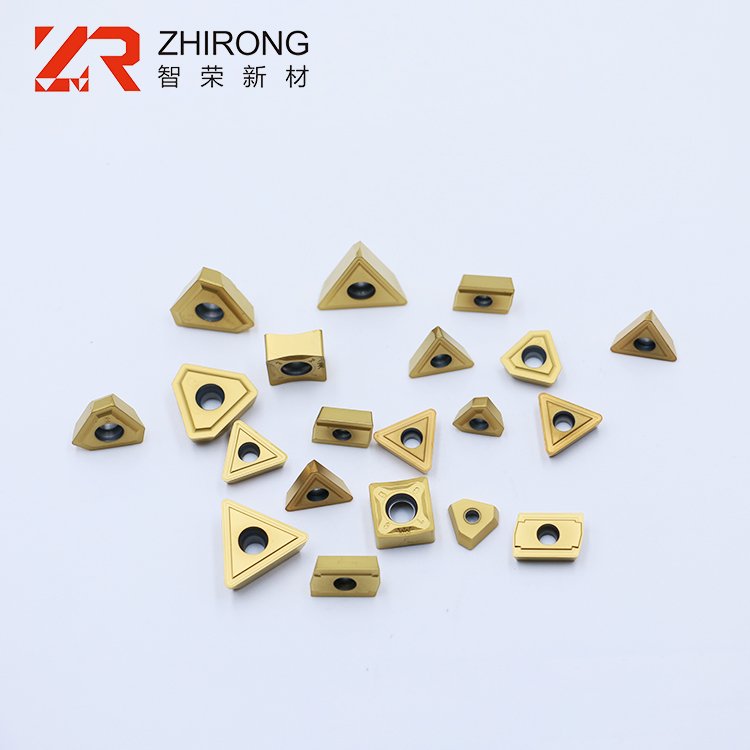
Turning inserts come in various geometries (shapes) that influence the cutting performance and finish. The insert geometry impacts factors such as cutting forces, chip formation, and tool life. The most common geometries include:
- Triangle Inserts: Commonly used for general-purpose machining, providing three cutting edges and versatility.
- Square Inserts: Ideal for smooth cutting operations and creating sharp edges.
- Round Inserts: Used for finishing operations or when a fine surface finish is required. They tend to have the highest edge strength.
- Rhombic Inserts: Often used in light cuts and finishing operations, offering multiple cutting edges.
When selecting geometry, consider factors like the type of cut (roughing or finishing), the shape of the workpiece, and the required surface finish.
3. Select the Right Grade (Material & Coating)
The grade of the turning insert refers to the material and coating used. The right grade ensures the tool performs well under the specific cutting conditions. There are three key components to grade selection:
- Substrate Material: The substrate of the insert can be carbide, ceramic, cermet, or high-speed steel (HSS), among others. Carbide is the most common due to its toughness and heat resistance.
- Coating: Many turning inserts feature coatings like CVD (Chemical Vapor Deposition) or PVD (Physical Vapor Deposition), which provide wear resistance and reduce friction.
- CVD Coating: Offers excellent wear resistance and is ideal for heavy-duty machining, like roughing.
- PVD Coating: Provides a smoother surface finish and is typically used for finishing cuts, with good heat and wear resistance.
The grade selection depends on the cutting speed, material hardness, and cutting type. For instance, if you're working with high-temperature alloys, a coating that enhances thermal stability will be essential.
4. Consider Cutting Conditions
Your cutting conditions will dictate which turning insert grade is best suited for the job. Key factors include:
- Cutting Speed: Higher cutting speeds generally require harder inserts. If you plan to machine at higher speeds, a harder carbide insert with a tough coating is often recommended.
- Feed Rate: Higher feed rates increase tool wear, so tougher inserts are recommended. A tougher substrate and a coating can help improve tool life under high feed rates.
- Cutting Depth: For shallow cuts, you might opt for an insert that provides a finer surface finish. For deeper cuts, tougher inserts with better chip control are ideal.
5. Consider Tool Life & Cost
While it’s tempting to select the cheapest inserts, focusing on quality and longevity can save you money in the long run. Choose inserts that balance cost with performance. If you are performing high-volume machining, a slightly more expensive insert may last longer and reduce downtime.
6. Understand Insert Grades for Specific Applications
Different turning grades are designed for specific applications:
- General Purpose: For regular turning jobs, use versatile grades such as P grades for steel or K grades for cast iron. These inserts have good toughness and wear resistance.
- Roughing: For heavy material removal, select inserts with high toughness, like M or P grades, and coatings like CVD.
- Finishing: For fine surface finishes and high-precision machining, choose inserts with lower cutting forces and excellent wear resistance, such as N or K grades, often with PVD coatings.
7. Test and Monitor Performance
Once you've selected your insert and grade, it's important to test it on your machine. Regular monitoring and adjustments are essential to optimize cutting parameters for better performance, tool life, and efficiency.
Final Tips:
- Check Manufacturer Recommendations: Always refer to the manufacturer's guidelines and suggestions for specific material and application requirements.
- Consult with Experts: If you're uncertain about your selection, don't hesitate to reach out to cutting tool experts or suppliers, especially those with experience in machining a wide range of materials.
By considering all of these factors—material type, insert geometry, grade, cutting conditions, and the balance of cost versus performance—you’ll be able to select the best turning insert for your job, ensuring a balance of productivity, tool life, and finish quality.